Thursday, May 7, 2015

LG G5 Edge Brings Curved Screen Edges to LG’s Portofolio

LG and Samsung have the habit of dueling throughout the year, launching thinner and thinner TV sets, curved sets, handsets with more processing power and lately unusual formats. I remember when LG launched a curved phone and then Samsung replied with the Galaxy Round. Now we get to see the LG G5 Edge as a very late response to the Galaxy S6 Edge.
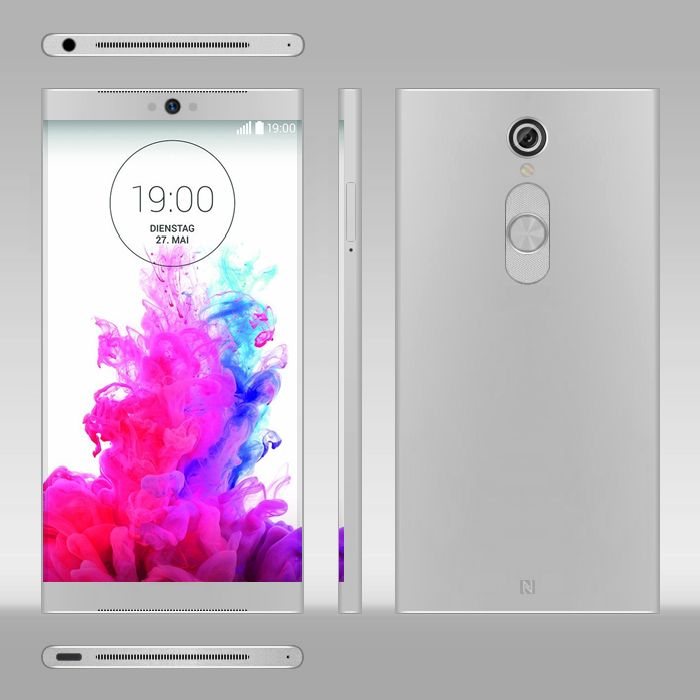
LG G5 Edge concept
This one is supposed to be a 2016 handset, a concept phone created by uva7 dance. The designer envisions this as a second version of the 2016 LG flagship phone, the LG G5. The newcomer measures 6.4 mm in thickness, keeps the basic design traits of the LG G4, if you ask me, but also brings an interesting speaker approach. We’ve got a long earpiece at the top and what seems to be a big speaker at the top and bottom.
The camera lens at the back is discrete and there seems to be no phase detection autofocus mechanism here. The main piece of innovation for the LG G5 Edge is certainly the curved screen edges, that are shown here. The idea of the Galaxy S6 Edge is replicated in a more square-ish way and the sides of the phone are now a bit bigger than on the Samsung device.

Sony Xperia Z5 Gets Rendered, Looks Incredibly Slim

Now with the Xperia Z4 basically out of our way, we can start thinking of theXperia Z5. The device gets rendered below and it also gets specced. While the overall format may not be a surprise, the waistline here is very slim.
Sony Xperia Z5 concept 1
The Z5 has a metal frame, a glass back and front and very narrow bezels. The smartphone packs an octa core processor, clocked at 3.2 GHz, as well as 4 GB of RAM and a 4K display. A fingerprint sensor and waterproof case are also in the mix, as one may expect. The designer also imagined a 4500 mAh battery on board and included a 30 megapixel main camera, plus a 10 megapixel front shooter with face detection.
Sony Xperia Z5 concept 2
The screen diagonal is 5.5 inches and this model is probably slimmer than 7 mm. The CPU is probably a Snapdragon 815 or 820, unless Sony pulls a stunt and switches to an Intel, Exynos, Nvidia or MediaTek, which I don’t see happening. It would be really ironic to see Sony switching to something else than glass after Samsung went with glass.
Plastic, metal, carbon fiber?
Sony Xperia Z5 concept 3
Sony Xperia Z5 concept 4

Samsung Galaxy Note 5 Already Rendered, Has a 4K 5.9 Inch Super AMOLED Screen (Video)

Samsung Galaxy Note 5 has received a few renders till now and people started dreaming of it as soon as the Note 4 was launched. And now we step into 4K territory with the Note 5 concept shown below.
Samsung Galaxy Note 5 concept 1
This handset features a 4100 mAh long lasting battery and it measures 7.9 mm in waistline, plus it adopts a metal body. There are 64 or 128 GB of storage inside and there’s a microSD card slot in the mix as well. As shown in the renders, the Galaxy Note 5 has a sturdy metal frame, but it also seems a bit more elegant than the one of the Note 4.
Samsung Galaxy Note 5 concept 2
Surprisingly I sense no cues from the design of the Galaxy S6, maybe the back side portion a bit, although I can’t see any glass in there. An USB Type C port should also be here, as well as the Home button with fingerprint scanner. Android 5.0 Lollipop is the OS here, together with pretty much the same TouchWiz UI of the Galaxy S6, give or take a few stylus-related features and apps.
There has to be a gimmick here, maybe an iris scanner, maybe a new batch of sensors, but there will certainly be one. You can find info about the camera and more in the video below.
Samsung Galaxy Note 5 concept 3
Samsung Galaxy Note 5 concept 4
Samsung Galaxy Note 5 concept 5
Samsung Galaxy Note 5 concept 6

Nokia 701 is a Revamped Symbian Phone, Now With Windows Phone on Board

Designer James Wood from London has refreshed the Nokia 700 Symbian phone and turned it into the Nokia 701, that runs Windows Phone. The idea was to refresh the design and make it harmonized with the new OS, while also keeping design traits from the original unit.
nokia 701 concept 1
I see there’s a metal frame here, as well as a polycarbonate body and the device is rounded at the top and bottom, plus it now gets the trademark Windows Phone buttons. The designer made this Nokia 701 concept in SolidWorks and Keyshot and placed its speakers at the bottom. There’s a bit of a chin thing going on here and I bet the back side of the case is removable.
The handset is rendered in blue, green and yellow, as well as black and it has a slightly curved profile. The facade is all glass, seemingly extending to the edge of the phone, probably thanks to a ClearBlack panel. I expect something like a quad core lower end CPU inside, 1 GB of RAM and 8 or 16 GB of storage, plus a 5 MP camera.
nokia 701 concept 3
nokia 701 concept 2

Samsung Nexus 5 (2015) Envisioned by Miqdad Abdul Halim

Lately the Nexus 9 has been a bit of a black sheep for Google, since they haven’t offered the Android 5.1 update for it, let alone the brand new Android 5.1.1. The Nexus 6 didn’t exactly spark a lot of interest, although it’s a pretty solid phone, but also a very big one. People need a new “inbetweener” and that may just be theNexus 5 2015.
Nexus 5 2015 concept
Envisioned by Miqdad Abdul Halim, this model is a Samsung-made Nexus 5, with very narrow bezels and a design format that seems to combine the Nexus 4 and Nexus 6, in my view. Upfront we’ve got a 5.2 inch Super AMOLED display, with a Full HD resolution and inside we get the ultra powerful Exynos 7420 processor. Other specs include a 2.1 MP front camera with wide angle lens, dual front facing stereo speakers and a notification LED below the screen.
At the back there’s the main 13 megapixel camera with F/1.9 aperture, OIS, HDR mode, dual tone flash and a 2700 mAh battery. Wireless charging, USB Type C and what seems to be a fancy and solid metal frame are also here. Would this be the “Marshmallow Android” Nexus?

Microsoft Lumia 940 and Lumia 940 XL Rendered by Microsoft Lovers, With Realistic Specs

The group Microsoft Lovers has come up with a few lovely Lumia concepts over the past months, but one more can’t be bad, right? Well, today we come across the Microsoft Lumia 940 and the Lumia 940 XL concept, created by the same people.
microsoft lumia 940 concept may 2015 4
Both models seem to stick with some of the usual Nokia/Lumia design traits, but they also change some aspects. For example, the camera area, while staying big, it’s not protruding as much now and seems to have glass protection. The facade of the handset seems to feature curved glass, much like the ZTE Nubia Z9. Microsoft Lumia 940 is a 5.2 inch Super AMOLED affair, with a Full HD ClearBlack screen and an aluminum unibody case.
microsoft lumia 940 concept may 2015
There’s Windows 10 as the OS here and the main selling point is most likely the 25 megapixel Pureview camera with Zeiss Lens, triple tone LED flash and third gen OIS. The feature list is very big and includes a 5 MP super wide angle selfie shooter, Intel Realsense 3D, up to 128 GB of storage and 3 GB of RAM. The hexa core Snapdragon 808 CPU is placed inside, but the 128 GB and 64 GB versions get the future Snapdragon 815.
Finally, 3D touch and a 3250 mAh battery are also here. Lumia 940 XL adopts a 5.7 inch Super AMOLED 2K display, the same camera and OS, but it also gets a cool stylus and a 3950 mAh battery. Special things indeed!
microsoft lumia 940 XL concept may 2015
microsoft lumia 940 concept may 2015 win 10
microsoft lumia 940 concept may 2015 2
microsoft lumia 940 concept may 2015 3

HTC Clear Concept Phone is a Transparent Handset Made of a See Through Glass

I’m pretty sure that ever since this site was founded I’ve seen less than 20 see through glass concept phones. Thus, I can say that this approach has been neglected. Well, no longer, since Webomedia from Croatia has created a glass and see through HTC concept handset.
HTC Clear concept transparent phone
It’s called HTC Clear and it comes with an edge to edge display, as well as what appears to be a totally glassy case. There’s no telling if the effect is created via optical illusion, using a bunch of cameras, or if the case is actually all glass, but it does look interesting. There are several problems that such a design poses: fragility, thickness, the inclusion of components in an efficient way and the ease of use.
I guess it may be fine to enjoy the augmented reality benefits of a transparent design, but it’s also very distracting to see what’s happening in the background while you’re texting, checking your Facebook or email. In the end it could work with a bunch of cameras, that turn transparency on or off, depending on what they capture.